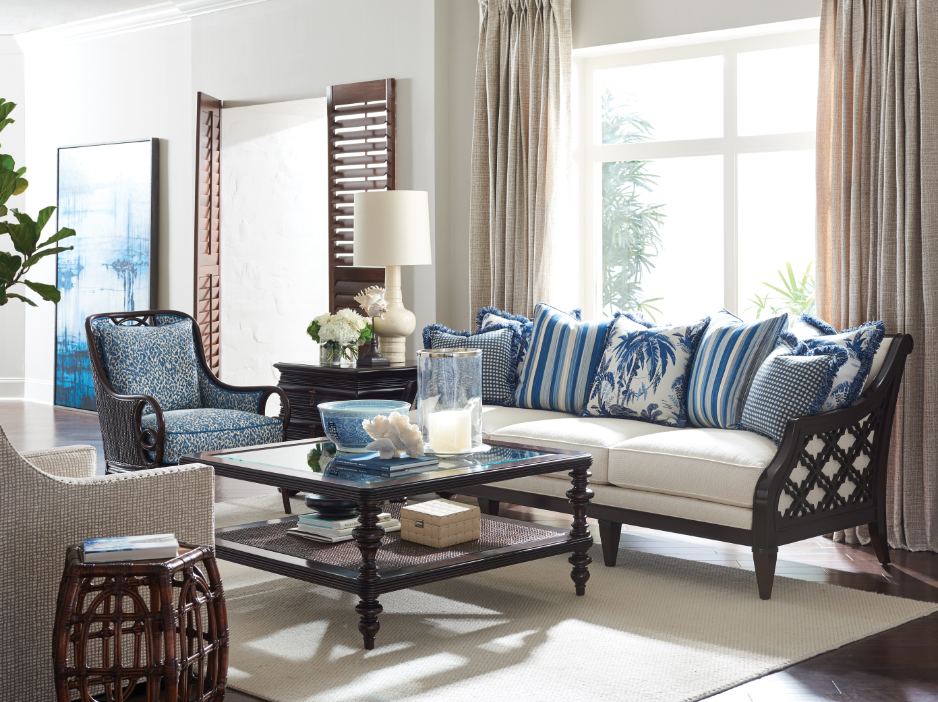
For homeowners moving into the coastal aesthetic, the right approach is to start with three or four anchor pieces rather than redoing an entire room at once. The foundation of coastal living room furniture is a generously scaled sofa in linen or performance linen, an accent chair in natural fibers like rattan or cane, a substantial coffee table in light wood or stone, and one or two tables that bring in additional natural texture. Everything else (rugs, lighting, textiles, art) layers in over time.
This piece walks through the specific furniture pieces that establish the coastal look, what to prioritize, and what to skip until later. The goal is a room that reads as relaxed and cohesive without requiring a single-weekend renovation.
Why Start With Anchors, Not Accents
The coastal aesthetic looks effortless because it’s built on substantial pieces with quiet authority. Trying to coastalize a room by adding small accents (throw pillows, candles, woven baskets) on top of furniture that doesn’t fit the look rarely works. The pieces underneath end up fighting the styling.
Better to invest in two or three anchors that establish the foundation, then layer the styling onto pieces that already belong. A linen-toned sectional with a substantial coffee table and a single rattan chair will read as more coastal than a velvet sofa surrounded by twenty coastal accents. The math favors the anchors.
Piece One: The Sofa or Sectional
This is the largest single decision and the one that does the most work. A coastal sofa should be:
- Substantial in scale. Not undersized. The piece should look like it can hold its own in a generously proportioned room.
- Upholstered in a natural-tone fabric. Sand, oat, ivory, warm gray, or muted blue-gray all work. Strong color is a different aesthetic.
- A natural-fiber-look fabric (linen, cotton, performance linen). The texture is part of the look. Sleek velvets and tight microfibers don’t read coastal.
- Lower in profile, with deeper seats. Coastal seating prioritizes ease over formal posture. Look for slightly lower arm heights, generous seat depth, and full down or down-blend cushions.
For households with kids or pets, performance linen is the cleanest option. It looks identical to natural linen but resists staining, abrasion, and UV fading. Most upper-end furniture brands now offer performance fabric across nearly all upholstered silhouettes. Tommy Bahama Home, Sunset Key and Ocean Club collections in particular, include extensive performance fabric options. Pricing for a substantial coastal sofa or sectional generally runs $4,500 to $9,500, depending on size, fabric, and customization.
Piece Two: An Accent Chair in Natural Fiber
The second anchor that defines the coastal look is a natural-fiber accent chair. The most common and most successful options:
- A rattan or cane-back lounge chair. Either with woven backs and upholstered seats, or fully woven structures with a single seat cushion. Tommy Bahama Bali Hai accent chairs land squarely in this category.
- A woven occasional chair. Often paired in twos, flanking a fireplace or facing a sofa.
- A leather or weathered-finish leather club chair. A different texture that can work well in California coastal rooms with stronger Mediterranean architecture.
The rattan accent chair is the more recognizable coastal signature. As one recent piece on rattan furniture’s renaissance describes, the material has had a sustained comeback driven by sustainability and texture-rich design. A single rattan chair in an otherwise upholstered room can do more work for the coastal aesthetic than three smaller styling accessories.
Pricing on accent chairs typically runs $1,500 to $3,500, depending on construction and material.
Piece Three: A Substantial Coffee Table
The coffee table is the visual anchor that ties the seating area together. For coastal rooms, the right coffee tables share characteristics:
- Material weight. Travertine, weathered or driftwood-finish wood, white oak, or substantial reclaimed wood. Avoid spindly metal-and-glass tables that look like they belong in a different room.
- Generous proportion. The piece should feel proportional to the seating around it. Undersized coffee tables make a room feel unfinished.
- Texture and patina. Honed (not polished) stone tops. Wood with visible grain. Surfaces that look better with use, not worse.
A Tommy Bahama coffee table in Bali Hai (with rattan-wrapped frame), Sunset Key (driftwood finish), or Key Biscayne (light alder with bamboo motif hardware) will all anchor a coastal room well. Pricing typically runs $2,000 to $4,500 for an upper-end coffee table at this scale.
Piece Four: Side Tables and a Console
Once the sofa, chair, and coffee table are in place, side tables and a console behind the sofa fill out the room. These are the pieces that get specified last but make the room feel complete.
- Side tables. One on each side of the seating, ideally with a lamp surface and small storage. Mixing materials (a stone-topped side table on one side, a woven rattan side table on the other) reads more curated than matching.
- A console behind the sofa. Provides surface area for lamps, objects, and art. In coastal rooms, a console with woven detailing or a natural-fiber base works particularly well. Avoid heavily ornamented or carved consoles that read traditional rather than coastal.
Pricing on side tables typically runs $1,200 to $2,800 each, and consoles run $2,500 to $5,000. For more on planning the room as a whole, the luxury living room guide covers proportions and layout principles that apply directly to coastal rooms.
What to Skip Until Later
A few pieces that often get prioritized too early:
- Heavy entertainment units. Wait. Most coastal rooms work better with a simpler media console (or a wall-mounted television over a console) than a large built-in unit.
- Bar carts. Useful but accent-level rather than foundation-level. Add after the anchors are in.
- Bookcases and étagères. Substantial in scale but easy to over-buy. Plan around the existing wall space and the books or objects you actually want to display.
- Ottomans. Useful for additional seating and surface, but easy to add later once the primary seating is in place.
What Mark Thomas Home Sees Most Often
In the Mark Thomas Home showroom, coastal rooms most often start with one of these configurations:
- Sofa, two accent chairs, coffee table, and one side table. A natural starting point for most California living rooms.
- Sectional, two accent chairs, and a coffee table. For larger rooms or rooms that anchor an open-plan kitchen and family room.
- Two facing loveseats, a coffee table, and a console. A more conversational layout that works in rooms with a strong fireplace or view focal point.
In each case, the buyer establishes the anchors first and adds the layering pieces (rugs, lighting, art) over the following months. This sequence almost always produces a better result than buying everything at once. The Mark Thomas Home design team routinely helps clients plan in stages, including pulling fabric memos, confirming proportions against actual room dimensions, and coordinating delivery so that the anchor pieces arrive together.
A Quick Decision Framework
For homeowners not sure where to start, the simplest test:
- Pick the coastal sub-style. Strict California coastal, Tommy Bahama tropical, modern coastal, or Hamptons-coastal.
- Decide whether to anchor with a sectional or a sofa-and-chair pairing.
- Visit the showroom. Test fabrics in natural light, test scale against your room dimensions, and pull memos to take home.
- Commit to the anchors first. Add accents after.
For California homeowners building coastal living room furniture into a primary residence, this approach almost always produces a more cohesive room than trying to source everything in a single weekend. The pieces that matter (the anchors) deserve the time. The accents will follow naturally once the foundation is right.