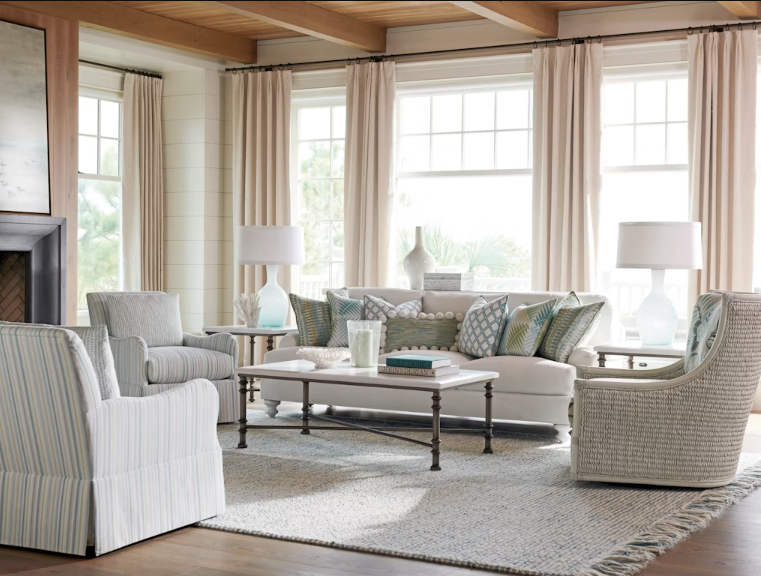
A California coastal living room is built around three things: a sun-bleached neutral palette, natural materials with visible texture, and furniture silhouettes that prioritize ease over formality. The look is less about literal seashells and anchors and more about layering linen, oak, rattan, and stone in ways that feel relaxed but considered.
This is what separates real California coastal interior design from its more nautical, beachy cousins. The aesthetic reads as effortless even though the layering takes thought. For homeowners in Agoura Hills and the surrounding Conejo Valley, where the architecture often supports indoor-outdoor flow and abundant natural light, the look fits the homes themselves rather than feeling imposed on them.
What Defines the California Coastal Look?
California coastal is best understood by contrast with adjacent styles. As one feature on coastal Scandifornia in Homes & Gardens explains, the contemporary California coastal aesthetic blends minimalism with relaxed coastal texture. It’s softer and more layered than Scandinavian, warmer than strict modern minimalism, and more refined than traditional beach cottage.
The signatures are consistent:
- A neutral foundation. Sand, ivory, oat, and warm white form the base palette.
- Soft accent colors. Powdery blues, sage greens, terracotta, and weathered driftwood gray pulled directly from the California coastline.
- Natural materials throughout. White oak, rattan, jute, linen, sisal, travertine, and unfinished or lightly finished wood.
- Filtered natural light. Sheer linen drapery, light-colored walls, and minimal window treatments that let the room change throughout the day.
- Furniture that’s substantial but relaxed. Generous seating, lower-profile silhouettes, and pieces that look like they’ve already been broken in.
What it isn’t: stark minimalism, heavy traditional, themed coastal kitsch, or beach-bar aesthetic. A California coastal living room should look like it could be photographed on a Tuesday afternoon without staging.
Building the Palette
Color is where most coastal living rooms either succeed or quietly fail. The instinct is often to reach for the navy-and-white nautical palette that defined coastal design twenty years ago. The current California version moves in a different direction.
Start with a warm white or oat-toned wall color. Add layered neutrals through the textiles: a linen sofa, a wool rug in a muted tone, a few accent pillows in faded blues or sage. Bring in one or two pieces with deeper warmth (a leather chair, a walnut coffee table, a stone-topped console) to anchor the room and prevent it from feeling washed out.
The Mark Thomas Home guide to color in luxury interiors covers this kind of palette work in more depth. The guiding principle: depth comes from layering tones within the same family, not from contrast. A room that reads as “sandy” can include five or six different versions of beige, cream, and oat without ever feeling monotone.
Materials That Carry the Look
California coastal lives or dies on its materials. Synthetic finishes, glossy surfaces, and obviously machine-made textures break the spell. The materials that consistently work:
- White oak. The de facto wood of California coastal. Pale, warm, with visible grain. Floors, coffee tables, dining tables, and built-ins.
- Rattan and natural fiber. Whether woven into chair backs, wrapped around bed frames, or used in pendant lighting. Tommy Bahama Home’s rattan-forward collections (especially Bali Hai) translate directly into this look.
- Linen, cotton, and wool. Upholstery, drapery, and rugs in natural fibers. Performance versions are available for households with kids and pets.
- Travertine, limestone, and unfinished marble. Side tables, coffee tables, and accent surfaces.
- Aged brass and natural metals. For lamp bases, hardware, and trim. Polished chrome reads cold in this palette.
Avoid: high-gloss lacquer, synthetic leather (use real or be honest about choosing performance fabric), chrome and stainless steel as visual feature, and anything that reads as “tropical” rather than “coastal.” The California version is about restraint, not exuberance.
Layout and Furniture Placement
A California coastal living room benefits from a generous footprint when possible. The aesthetic depends on space around the furniture, with sight lines that connect the room to outdoor spaces and natural light. Some practical principles:
- Anchor with a substantial sofa or sectional in linen or performance linen. Light-colored upholstery is core to the look. Match it with a rug large enough that all front legs of the seating land on it.
- Add two accent chairs in a contrasting material. A pair of rattan or woven chairs flanking a fireplace, or two upholstered chairs facing the sofa, both work.
- Use a coffee table with material weight. Travertine, weathered oak, or a substantial driftwood-finish piece. Avoid spindly metal-and-glass tables that look like they belong in a different room.
- Layer in side tables and a console. A console behind the sofa serves as visual anchor and surface for lamps and objects. Side tables flanking the seating provide function without crowding.
For a more thorough room-planning framework, see the luxury living room guide for Agoura Hills homes, which covers proportions, layout, and pieces in depth. For buyers just establishing the foundation, the coastal home decor pieces to start with breaks down the anchors before getting into accents.
Lighting and Layering
Lighting in a California coastal room should feel like the daylight that surrounds it: soft, diffused, and warm in the evenings. Layer three sources:
- Ambient. A subtle ceiling fixture, ideally something with a natural-fiber shade or pendant detail. Avoid harsh recessed-only lighting.
- Task. Floor lamps and table lamps with linen or paper shades. The light should warm the room rather than illuminate it directly.
- Accent. Picture lights on artwork, small lamps on bookshelves, candles for evening.
Layer in textiles and objects gradually. A few pillows in mixed textures (linen, rough cotton, lightly woven), one or two throws, a stack of substantial books on the coffee table, a piece of artwork that nods to nature rather than literal beaches. As one recent piece on California coastal interior design puts it well, the look is less about adding things and more about choosing fewer things with care.
Specific Tommy Bahama Pieces That Fit
For homeowners building a California coastal living room with Tommy Bahama Home pieces, several collections fit the aesthetic naturally:
- Sunset Key. The most contemporary and lightest of the casegoods collections. Reads cleanly in California coastal living rooms.
- Ocean Club. A more refined, slightly more traditional take. Suits homes leaning toward coastal-Hamptons.
- Key Biscayne. The newest collection, with light driftwood finishes and refined detailing. Particularly well-suited to coastal California.
- Bali Hai. Used selectively (a single accent chair, a console, or a small bar piece) rather than as the dominant collection.
The pieces that consistently work as anchors: a Sunset Key sofa or sectional in linen-toned upholstery, a Bali Hai or Ocean Club rattan accent chair, a travertine or driftwood-finish coffee table, and a console with woven detailing.
What to Avoid
Three common mistakes to skip:
- Theming. A coastal living room shouldn’t read as a beach gift shop. Skip the rope details, the literal anchors, and the “live laugh love by the sea” signage.
- Over-whitening. Pure white everything looks like a hotel lobby. The palette needs warmth and tonal variation.
- Spindly furniture. Coastal doesn’t mean delicate. The pieces should feel substantial enough to live with for decades, not staged for a photoshoot.
Done well, California coastal interior design should feel as natural as the climate it draws from. For homeowners exploring the look in their own home, a showroom visit is the fastest way to test materials, finishes, and silhouettes against the home’s existing architecture.