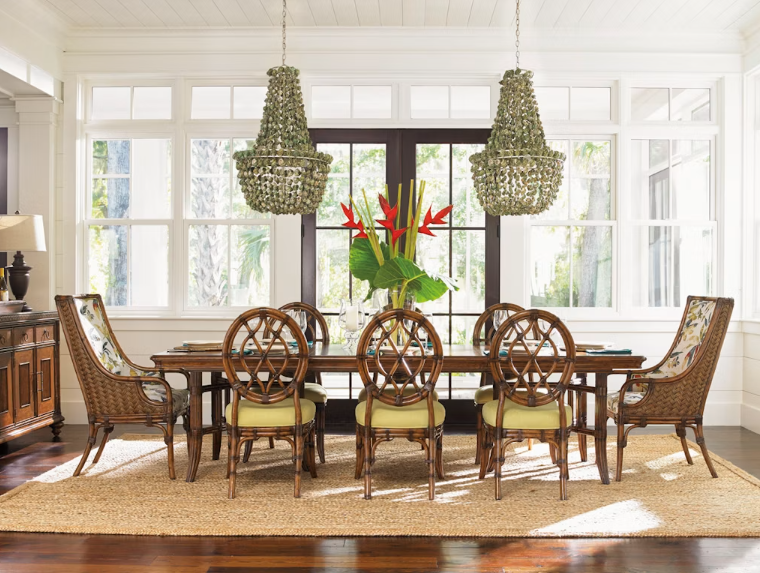
The Tommy Bahama Bali Hai collection is a British West Indies and Polynesian-inspired furniture line built around woven raffia, leather-wrapped bent rattan, crushed bamboo, and Penn shell inlay. The collection covers full bedroom and dining suites along with select living and accent pieces, with most casegoods running between $2,000 and $7,000 retail and the signature Island Breeze Rattan Bed setting the centerpiece for many bedrooms.
For buyers exploring Tommy Bahama Bali Hai furniture, this guide walks through the design story, the signature materials, the standout SKUs, and how to think about the collection in the context of a real California home.
What Inspires the Bali Hai Collection?
Bali Hai takes its design cues from the great resort estates of the Caribbean and the South Pacific. The reference points include British West Indies plantation homes with their hand-woven panels and leather-wrapped detailing, Polynesian villas with their use of bamboo and natural texture, and the shell-inlay craftsmanship of the Philippines and Indonesia.
The result is one of the most overtly tropical of all the Tommy Bahama Home collections. Where collections like Sunset Key and Ocean Club lean toward contemporary coastal, Bali Hai goes fully into resort vocabulary. It’s not a subtle collection, and that’s the point. Buyers who want their bedroom or dining room to feel like a destination rather than a default landing on Bali Hai because it does that work better than almost anything else on the market.
The Signature Materials of Bali Hai
The material vocabulary is what gives the collection its visual signature:
- Woven raffia panels appear on bed footboards, side rails, dresser fronts, and cabinet doors. The raffia is hand-woven, not printed or stamped, which gives the panels their texture and depth.
- Leather-wrapped bent rattan shows up on headboards, chair frames, and barstools. The leather is applied by hand and often wraps around the rattan in alternating pattern lengths.
- Crushed bamboo veneer covers select case pieces and adds vertical texture. The veneer reads almost as a custom wallpaper applied to the wood.
- Penn shell inlay appears as decorative banding and accent panels. The shell catches light and adds depth that wood alone can’t provide.
- Bamboo carving appears on side rails, posts, and trim. The bamboo motif is integrated into the structure rather than applied as a sticker.
- Aged brass hardware in custom designs unique to the collection.
These elements are part of what’s driven the broader rattan renaissance in luxury interiors. Rattan as a material has had a sustained comeback over the past few years, partly for sustainability reasons (rattan grows quickly and harvests responsibly) and partly because designers have rediscovered its texture in spaces that had grown too sleek and minimal. Bali Hai sits at the high end of that movement.
Standout Pieces in the Bali Hai Collection
The collection scales to fit different rooms. Here’s a breakdown of the pieces buyers reach for most often:
Bedroom
Island Breeze Rattan Bed. The signature piece. The headboard and footboard are leather-wrapped bent rattan with reeded posts and ball finials. The side rails feature woven raffia panels framed by bamboo carvings. Available in twin, queen, king, and California king. The headboard alone runs around $4,700 to $6,500, and the full bed (headboard, footboard, rails) runs higher.
Tobago Drawer Chest. A six-drawer chest with raffia panels and bamboo trim. Functions as a primary bedroom storage piece and runs around $4,200 to $5,800.
Balencia Gentleman’s Chest. Taller than the Tobago, with a mix of drawers and a cabinet section. Designed for hanging or folded clothing. Runs around $4,600 to $6,200.
Sojourn Nightstand. Three drawers, raffia front panels, bamboo trim. Pairs naturally with the Island Breeze bed. Runs around $2,100 to $2,900 each (most clients buy two).
Breakers Double Dresser. A wider, lower dresser with substantial drawer storage. Often paired with a mirror over it as a vanity. Runs around $4,500 to $6,000.
Costa Sera Triple Dresser. Even wider than the Breakers, with a third bank of drawers. Better suited to larger primary suites. Runs around $5,000 to $6,800.
A full Bali Hai bedroom suite (bed, dresser, two nightstands, optional chest) generally runs between $14,000 and $22,000, depending on configuration and finish.
Living Room and Accent Pieces
Bali Hai accent chairs. Several silhouettes feature leather-wrapped rattan frames with upholstered seats and backs. Often used as side chairs in a living room or as occasional chairs in a primary suite.
Bali Hai game chair. Built on a leather-wrapped rattan base with a split rattan-wrapped frame. The outside arms and back feature a herringbone pattern of woven rattan. Antique brass ferrules and casters complete the look.
Bali Hai serving cart and bar pieces. Handles wrapped in rattan, shelves of cocoa shell veneer under protective coating. Adds a coastal-resort element to a dining or great room.
Dining
The Bali Hai dining set typically pairs a substantial dining table with woven-back chairs. Tables run around $4,500 to $6,500, with chairs at $900 to $1,500 each. A full eight-seat dining set with a sideboard generally runs between $14,000 and $20,000.
How Bali Hai Mixes With Other Tommy Bahama Collections
Bali Hai isn’t designed in isolation. The finish vocabulary, the brass hardware, and the relaxed silhouettes are designed to coordinate with the broader Tommy Bahama Home portfolio. Common mixes that work:
- Bali Hai bed with Sunset Key dresser. The lighter Sunset Key finish balances the warmth of Bali Hai for buyers who want a softer overall palette.
- Bali Hai dining table with Royal Kahala or Twin Palms chairs. The mix brings in cleaner silhouettes while keeping the natural-material continuity.
- Bali Hai accent chairs in a Sunset Key or Ocean Club living room. A subtle way to introduce the texture of rattan and leather without committing the whole room to the Polynesian aesthetic.
The Mark Thomas Home design team helps clients work through these mixes during showroom consultations, including pulling fabric memos for upholstered pieces and confirming that finishes coordinate across collections.
Where Bali Hai Lives Best
Bali Hai is at its most beautiful in homes where the architecture supports it. Mediterranean and Spanish Revival homes, contemporary California with strong indoor-outdoor flow, and homes with vaulted ceilings or expansive natural light. The collection’s warmth and texture can feel heavy in tight, low-ceiling spaces, but in the right room it adds the kind of richness that smaller-scale furniture can’t deliver.
In Agoura Hills and across the Conejo Valley, Bali Hai works particularly well in primary bedrooms that face hillside views, in great rooms that open to outdoor patios, and in dining rooms with natural light from multiple directions. The collection’s natural materials soften over time and develop patina, which suits homes meant to be lived in rather than staged.
For buyers ready to see the collection in person, Mark Thomas Home maintains Bali Hai pieces in the Agoura Hills showroom. Many of the textures (raffia, leather-wrapped rattan, capiz inlay) only fully read in person, and the showroom team can pull samples to take home before committing.