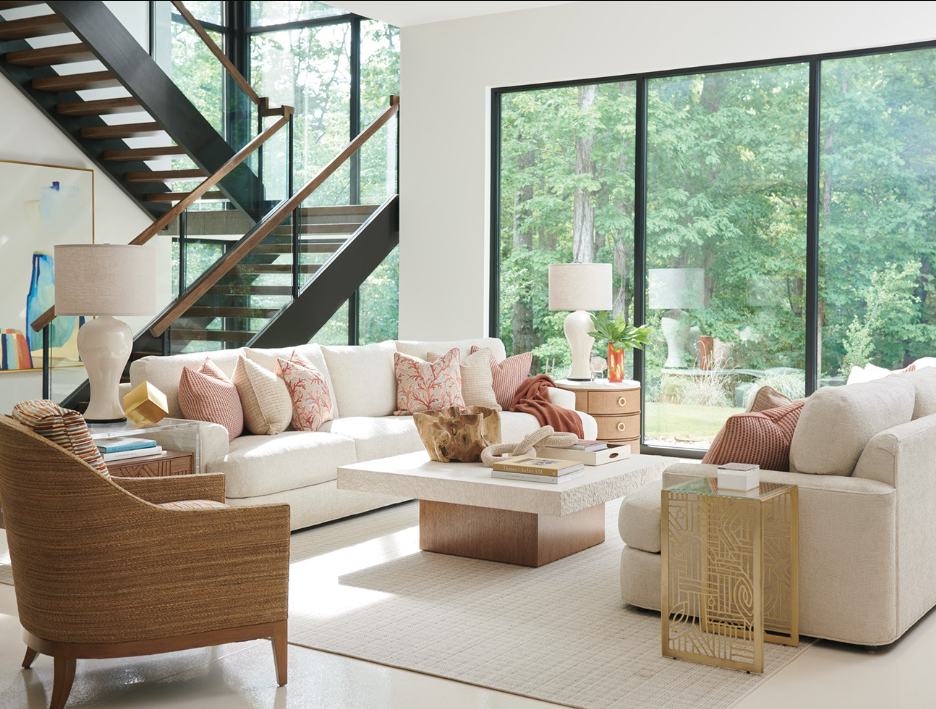
For buyers who plan to keep their furniture for fifteen to thirty years, Tommy Bahama Home is generally worth its price. The line uses kiln-dried hardwood frames, mortise-and-tenon casegoods joinery, dovetailed drawers, and accent materials (woven raffia, leather-wrapped rattan, capiz shell, travertine) that aren’t available at lower price tiers. The math gets harder to justify for buyers who replace furniture every five to seven years.
That’s the short answer to “is Tommy Bahama furniture worth it.” The longer answer depends on how a buyer plans to use, keep, and eventually pass on the pieces. This breakdown looks at what the price tag actually buys, where the value comes from, and where buyers should pause before committing.
What the Price Tag Actually Buys
Tommy Bahama Home pricing reflects construction details that aren’t visible at first glance. Three things drive the cost:
Frame construction. Kiln-dried hardwood frames stay dimensionally stable as the wood acclimates to the home. Lower-tier furniture often uses inadequately dried wood that continues shrinking and shifting, leading to gaps, drawer misalignment, and joint failure within a few years. As one detailed buyer’s guide to wood furniture explains, properly dried hardwood with moisture content of around six to eight percent is the foundation of furniture meant to last decades.
Joinery. Mortise-and-tenon construction in the casegoods and dovetailed drawers throughout the line are not cosmetic. These joints actually tighten over time and can be repaired and refinished generations later. Butt joints reinforced with screws and glue, common in mid-tier furniture, are far more prone to failure under stress.
Accent materials. This is where Tommy Bahama Home really separates itself. Hand-woven raffia panels, leather-wrapped bent rattan, capiz shell inlay, crushed bamboo veneer, and stone tops all require skilled labor that doesn’t show up in mass-produced furniture. The brand’s British West Indies and Polynesian design vocabulary is built around these details.
The Price-Per-Use Calculation
A useful exercise: divide the purchase price by the years you reasonably expect to own the piece, then by the times per week you’ll use it.
A Tommy Bahama Home sectional that costs $8,500, used daily by a household for twenty years, works out to roughly $1.16 per day of use. A $1,800 sectional from a fast-furniture brand that lasts five years works out to $0.99 per day, slightly cheaper. But the cheap sectional needs to be replaced four times to match the lifespan of the better piece, which means buyers absorb four delivery cycles, four disposal cycles, and four rounds of decision fatigue.
The math gets more favorable for the better piece if the buyer keeps it longer or values not having to redo the room every few years. As one recent industry report on the luxury furniture market notes, the rise of “quiet luxury” reflects exactly this kind of math: buyers increasingly prefer understated, durable pieces over showy or trend-driven purchases that depreciate quickly.
What You Should Inspect at the Showroom
Buyers who want to validate the construction before committing can check a few things directly:
- Pull out a drawer. Look at the joints. Tommy Bahama Home drawers are dovetailed at both the front and back, with solid wood or cabinet-grade plywood bottoms. Tap the bottom of the drawer. It should sound substantial, not hollow.
- Lift a piece. Tommy Bahama casegoods are heavy because the frames and panels are real wood. Lightweight furniture is almost always engineered wood or hollow construction.
- Check the underside of upholstery. Look for corner blocks, hand-tied or pocketed coil springs, and a secure dust cover. Frames should be screwed and glued, not stapled.
- Inspect the finish. Run a hand across the wood. The finish should be smooth and even, with no rough spots, drips, or cloudy areas. The wood grain should be visible and consistent.
- Examine the accent materials. Raffia panels should be tight and even. Leather wrapping on rattan should be hand-applied without visible adhesive. Stone tops should be honed cleanly with no visible filler.
These details are part of why the showroom experience matters for upper-end furniture. Photos can’t show the texture, weight, or finish quality of a piece in person.
When Tommy Bahama Home Is Not the Right Choice
Tommy Bahama Home is not for every buyer. A few situations where it might not be the best fit:
- Short-term housing. Buyers in a rental or transitional living situation, or planning to relocate within a year or two, may not get enough use to justify the investment. Better to buy more accessible furniture and save for the long-term home.
- Heavy-use households without performance fabric. Tommy Bahama upholstery is built for daily use, but standard fabrics aren’t ideal for households with multiple young kids, large pets, or frequent guests. The fix is to specify performance fabric at order time, which the brand offers across most upholstered pieces.
- Buyers committed to a single trend. Tommy Bahama Home’s resort aesthetic is intentional. Buyers who think their style will shift toward strict minimalism, industrial, or maximalist looks within a few years should consider whether they’ll still want these pieces at that point.
- Bargain hunters. Tommy Bahama Home rarely deeply discounts. Discontinued items and floor samples occasionally come available at savings, but buyers expecting fifty percent off everyday should look elsewhere.
How Tommy Bahama Home Compares to Mid-Tier Alternatives
Mid-tier furniture brands often look similar at first glance but skip the construction details that drive longevity. The visible differences include thinner wood, lighter weight, exposed staples on upholstery, lower-grade fabrics, and accent details that are printed or stamped rather than woven, inlaid, or hand-applied.
A useful test: shop a Tommy Bahama piece in the showroom, then look at a similar-looking piece at a mid-tier retailer. Pull out drawers on both. Lift both pieces. Examine both finishes under the same lighting. The difference is usually obvious within a minute or two.
That said, Tommy Bahama Home isn’t the only luxury furniture line worth considering. For buyers who want to compare across the broader Lexington Home Brands portfolio (including Lexington proper, Barclay Butera, and Artistica Home), Mark Thomas Home carries multiple options and the design team can talk through trade-offs across brands.
Final Verdict
Tommy Bahama Home furniture is worth the price for buyers who:
- Plan to keep furniture for fifteen-plus years.
- Value construction details (joinery, hardwood frames, hand-applied accents) that drive longevity.
- Live in a home where the resort-inspired aesthetic feels authentic, particularly California coastal, Mediterranean, and contemporary architecture.
- Want the option to customize upholstery and select from a deep fabric library.
- Appreciate the visual continuity of building a room (or a home) within a single design language.
It’s not the right choice for buyers prioritizing the lowest possible price, refreshing furniture every few years, or living in transitional housing. For everyone else, the price-per-use math and the construction quality generally hold up against scrutiny, especially in markets like Agoura Hills where homes are built for long ownership.
For anyone weighing the line, the best next step is a showroom visit where the materials and construction can be evaluated directly. Photos and product descriptions tell only part of the story.