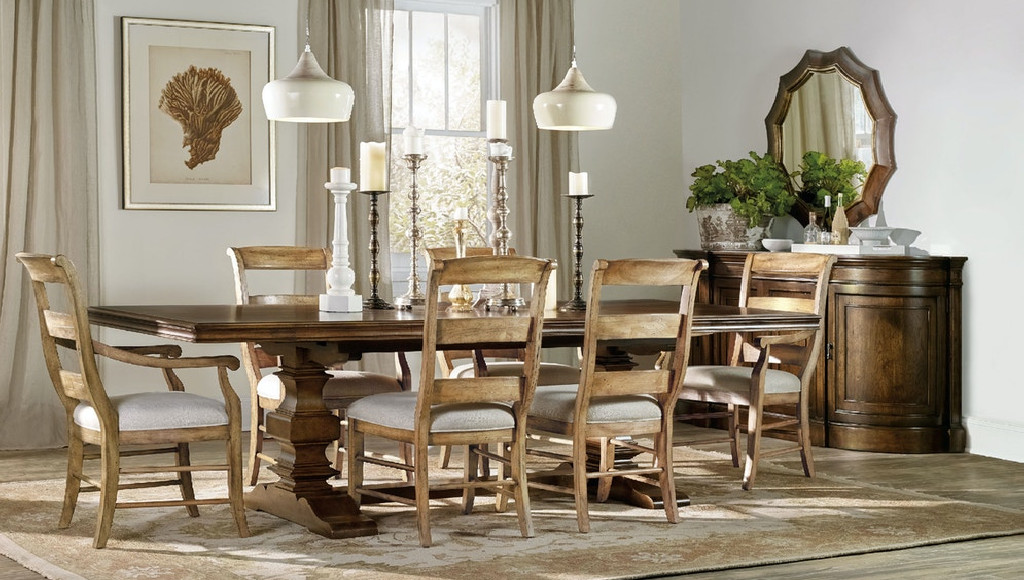
In the sphere of interior design, decision-making often involves a blend of aesthetic preferences and practical considerations. One such choice pertains to the use of rugs in the dining room.
The prospect of positioning a rug under a large dining room table often sparks discussion among homeowners and interior designers alike. Is it right for your own space, though? To help you decide, we’ll provide a deep dive into dining table rugs today, exploring the possible advantages and drawbacks of adding a rug to your dining area.
The Positive Aspects of Incorporating Rugs
Decorative Potential
Rugs carry a decorative potential that is hard to overlook. They can bring an array of colors, patterns, and textures into a room. This added layer of visual interest can substantially enhance the overall aesthetic appeal of your dining room, helping to create an inviting and stylish atmosphere. A rug can also serve to tie together various design elements within the space, leading to a more harmonious look and feel.
Acoustic Improvement
Rugs can also contribute to the acoustic quality of a room. In spaces with a significant amount of hard surfaces, sounds tend to echo and reverberate. This phenomenon, known as noise reflection, can be reduced by adding soft surfaces like rugs, which absorb sound waves. The resulting improvement in acoustics can make the dining experience more pleasant, especially during large gatherings or in open-concept homes where noise can easily travel.
Comfort and Warmth
From a tactile point of view, rugs offer a comfortable and warm surface compared to the often cold and hard feel of tiles or wood floors. The addition of a rug can increase the perceived coziness of the room, an aspect that may be particularly appreciated during colder months.
Space Definition
In the context of open-plan layouts, rugs can serve a functional role in defining different areas within a larger space. By visually demarcating the dining area, a rug can help create a sense of order and separation, without the need for physical barriers.
The Possible Challenges Associated with Rugs
Cleaning and Maintenance
Despite the aforementioned advantages, incorporating a rug in your dining room also presents certain challenges. One of the most obvious of these pertains to cleaning and maintenance. Rugs can attract dirt, dust, and spills more readily than hard surface floors, necessitating frequent vacuuming and spot cleaning.
Allergen Concerns
In addition to regular cleaning, rugs can pose an issue for those with allergies, as they tend to trap allergens such as dust, pollen, and pet hair. This could potentially trigger allergic reactions in susceptible individuals, leading to discomfort.
Functional Difficulties
A rug under the dining table can also cause functional difficulties. Chairs may not slide easily on a rug, making it harder for people to move in and out from the table. If not properly secured, rugs can also present a tripping hazard, posing a safety concern.
Critical Considerations for Choosing a Rug
When deciding whether to introduce a rug into your dining area, several key considerations come into play.
The size of the rug is crucial. It should be large enough to accommodate all chairs when pulled out from the table, generally extending at least 24 inches beyond the table’s edge on all sides.
Similarly, the material of the rug also plays an important role in determining its longevity and ease of maintenance. Wool, for instance, is a durable and stain-resistant material, but it also comes with a higher price tag. Synthetic options, while typically more affordable, may require replacement sooner.
Next, selecting the right color and pattern for your rug is equally important. The rug should complement the existing color palette and design elements in the room. The choice between neutral tones and bold patterns depends on your overall design theme and personal taste.
Lastly, consider the total cost of owning a rug. Apart from the initial cost of purchase, factor in regular cleaning, professional maintenance, and potential replacement costs.
Maintaining Your Rug: Quick Tips
If you choose to introduce a rug into your dining space, follow these quick tips for maintaining it:
- Regular Cleaning: Regular vacuuming is crucial to maintain the appearance of your rug and to keep dust and allergens at bay.
- Dealing with Spills: Prompt action is essential to prevent spills from becoming permanent stains. Remember to blot rather than rub the spill, working from the outside in.
- Professional Cleaning: Even with regular home care, your rug can benefit from occasional professional cleaning. This can help to restore its original beauty and prolong its lifespan.
Find the Ideal Rug for Your Dining Room Today
Deciding to place a rug under the dining room table is not a straightforward one. It involves a careful evaluation of various factors, from aesthetic preferences and acoustic benefits to cleaning requirements and potential allergen concerns. Ultimately, it will come down to your vision for your space and whether the benefits a rug provides also make the maintenance and upkeep feel worthwhile to complete the look and feel of your dining room.
If you decide that a dining room rug is the best choice for your home in the Bay Area, visit either of our showrooms in Agoura Hills or Santa Rosa. You can also browse our rugs collection online before your visit to discover some inspiring pieces for your dining space.
Proudly serving the Agoura Hills, Healdsburg, Los Altos, San Jose, Santa Rosa, Sonoma, and surrounding areas.
Related Links: